


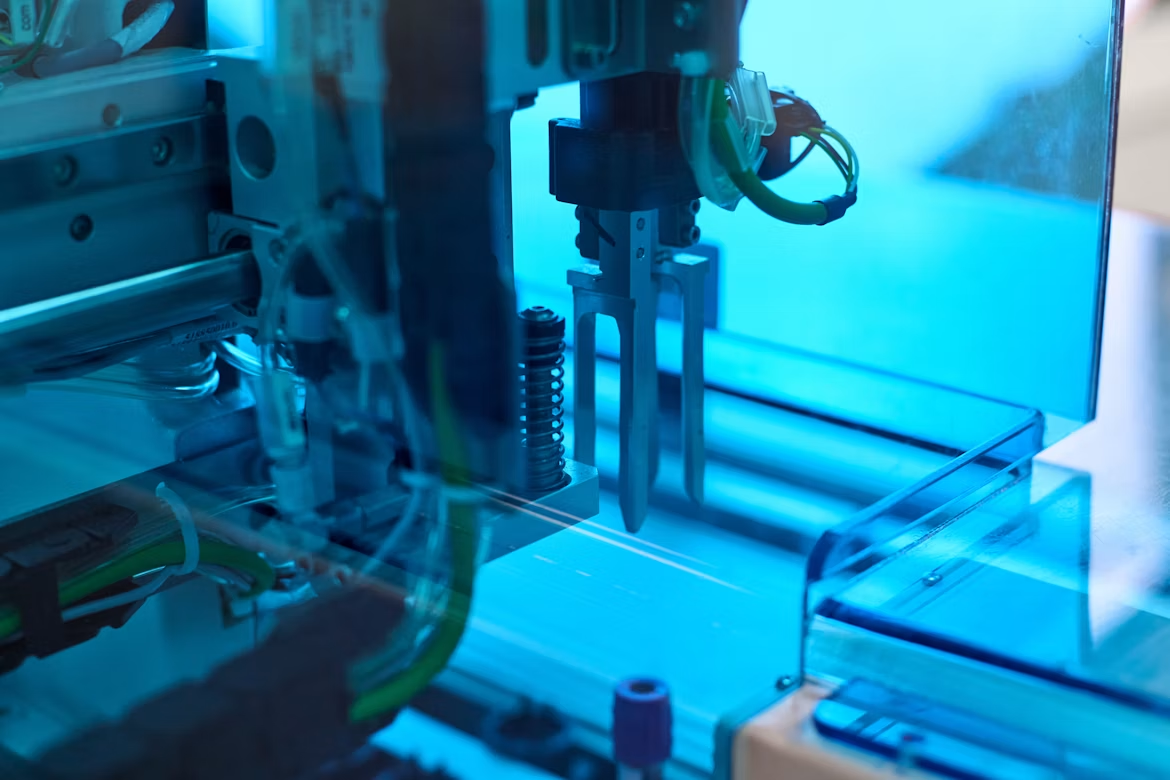
In high-volume manufacturing, the difference between a component produced within specification and one produced slightly outside it might be invisible to the naked eye. But in the context of an assembly line running thousands of units a day, that invisible difference accumulates in quality failures, in assembly downtime, in warranty claims, and in the kind of reputational damage that takes years to repair.
Precision matters in manufacturing not as an abstract virtue but as a practical requirement for reliability at scale.
Why Tolerances Are Non-Negotiable in High-Volume Contexts
A component designed to fit within a tolerance of plus or minus 0.1mm will behave predictably across the assembly process. One that drifts to 0.3mm might still function in isolation but creates fit problems when combined with other components, requires more adjustment time on the line, and increases the rate of defects at the assembly stage.
With Gulf Rubber’s custom plastic injection moulding, the consistency of output is often more commercially important than the headline unit cost. A cheaper supplier who delivers inconsistent components costs more than a premium supplier who delivers reliable ones, once you account for the full downstream impact.
The Role of Tooling Quality
In plastic injection moulding, the quality of the tool itself forms the foundation of part quality. A well-engineered mould, properly designed and maintained, will hold its dimensions reliably across hundreds of thousands or even millions of production cycles. This consistency is essential for maintaining tight tolerances at scale.
In contrast, a poorly designed or worn mould can introduce gradual dimensional drift that is often not immediately visible. These issues may only become apparent after defects begin accumulating in a customer’s production line, at which point they are far more difficult and expensive to correct.
This is why tooling investment, which can sometimes appear as a significant upfront cost, is rarely just an expense. In most high-volume production scenarios, it functions as a long-term safeguard that pays for itself through reduced defects, fewer interruptions, and more stable output quality over time.
Process Control Is Where Quality Is Really Made
The specification of a part is set at design. The quality of the part is determined in production. Temperature, pressure, cooling time, material moisture content, cycle consistency each of these variables affects the dimensional and structural properties of a moulded component. Managing them systematically rather than reactively is what separates manufacturers who reliably meet specification from those who chase problems.
Statistical process control, regular tooling audits, and material traceability are standard practice in quality-oriented facilities. If a supplier can’t explain their process control approach in detail, that’s relevant information.
What This Means for Procurement Decisions
Buyers responsible for sourcing critical components are typically evaluating far more than just price and lead time. Factors such as quality management certification, tooling ownership and maintenance practices, historical defect rates, and the supplier’s ability to provide full traceability documentation all play a role in a complete procurement decision.
For components where failure in service carries significant consequences whether in safety-critical applications, high-cost downstream assemblies, or customer-facing products the lowest price option is rarely the lowest-cost option in practice. When the full lifecycle cost is considered, paying more for a supplier with a proven, well-controlled quality system is almost always the more rational and lower-risk decision.
